0
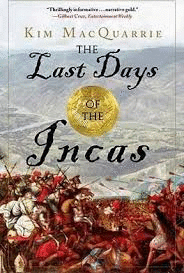
THE LAST DAYS OF THE INCAS

THE LAST DAYS OF THE INCAS

MACQUARRIE, KIM

S/ 99.00
.
No disponible
Editorial:
SIMON AND SCHUSTER
Año de edición:
2008
Materia
Historia del Perú
ISBN:
978-0-7432-6050-3
Páginas:
522
Encuadernación:
Rústica
S/ 99.00
.
No disponible
Añadir a favoritos

In 1532, the fifty-four-year-old Spanish conquistador Francisco Pizarro led a force of 167 men, including his four brothers, to the shores of Peru. Unbeknownst to the Spaniards, the Inca rulers of Peru had just fought a bloody civil war in which the emperor Atahualpa had defeated his brother Huascar. Pizarro and his men soon clashed with Atahualpa and a huge force of Inca warriors at the Battle of Cajamarca. Despite being outnumbered by more than two hundred to one, the Spaniards prevailed -- due largely to their horses, their steel armor and swords, and their tactic of surprise. They captured and imprisoned Atahualpa. Although the Inca emperor paid an enormous ransom in gold, the Spaniards executed him anyway. The following year, the Spaniards seized the Inca capital of Cuzco, completing their conquest of the largest native empire the New World has ever known. Peru was now a Spanish colony, and the conquistadors were wealthy beyond their wildest dreams.

But the Incas did not submit willingly. A young Inca emperor, the brother of Atahualpa, soon led a massive rebellion against the Spaniards, inflicting heavy casualties and nearly wiping out the conquerors. Eventually, however, Pizarro and his men forced the emperor to abandon the Andes and flee to the Amazon. There, he established a hidden capital, called Vilcabamba. Although the Incas fought a deadly, thirty-six-year-long guerrilla war, the Spanish ultimately captured the last Inca emperor and vanquished the native resistance.

Kim MacQuarrie lived in Peru for five years and became fascinated by the Incas and the history of the Spanish conquest. Drawing on both native and Spanish chronicles, he vividly describes the dramatic story of the conquest, with all its savagery and suspense. MacQuarrie also relates the story of the modern search for Vilcabamba, of how Machu Picchu was discovered, and of how a trio of colorful American explorers only recently discovered the lost Inca capital of Vilcabamba, hidden for centuries in the Amazon.

This authoritative, exciting history is among the most powerful and important accounts of the culture of the South American Indians and the Spanish Conquest.
Artículos relacionados

  • EL COMBATE DE CCOLLPAHUAYCCO
    EL COMBATE DE CCOLLPAHUAYCCO
    CAVERO CARRASCO, RANULFO / KAPSOLI ESCUDERO, WILFR
    El combate de Ccollpahuaycco, rescata para la memoria histórica un episodio decisivo de la campaña final por la independencia del Perú, cuya significación ha sido, durante mucho tiempo, insuficientemente valorada. Sobre la base del estudio del coronel Manuel Bonilla, esta edición revisita con rigor un hecho militar crucial ocurrido en vísperas de la Batalla de Ayacucho y propon...
    Disponible

    S/ 50.00

  • HISTORIA DEL PERÚ PARA DESCONTENTOS
    HISTORIA DEL PERÚ PARA DESCONTENTOS
    BÉJAR, HÉCTOR
    Historia del Perú para descontentos es un recorrido desde Cristóbal Colón hasta Pedro Pablo Kuczynski. Es un relato claro, redactado en estilo periodístico, sin maquillajes, descafeinado. No es una obra académica, pero está basada en fuentes primarias y secundarias. Tiene el objetivo de ser un banco de información para los peruanos y peruanas que quieren saber de dónde venimos ...
    Disponible

    S/ 129.00

  • LA LUCHA POR LA PROSPERIDAD
    LA LUCHA POR LA PROSPERIDAD
    CONTRERAS CARRANZA, CARLOS
    A lo largo de cinco siglos, la economía peruana se ha configurado bajo la influencia de un territorio exigente, una inserción internacional basada en recursos naturales y la necesidad persistente de construir un Estado capaz de sostener servicios públicos y cohesión social.En los estudios reunidos en este libro Carlos Contreras Carranza examina momentos decisivos de esa trayect...
    Disponible

    S/ 69.00

  • LA GENTE DECENTE DE LIMA
    LA GENTE DECENTE DE LIMA
    WHIPPLE, PABLO
    En las décadas posteriores a la Independencia, la etiqueta “gente decente” sirvió para afirmar jerarquías sociales y defender privilegios que sobrevivieron al fin del orden colonial. Aunque la república proclamaba la igualdad ante la ley, la “decencia” continuó funcionando como un criterio de distinción y superioridad moral.Sobre la base de una amplia documentación de archivo y...
    Disponible

    S/ 49.00

  • PARA DESPUÉS DE LA MUERTE
    PARA DESPUÉS DE LA MUERTE
    ANDRADE CIUDAD, LUIS / DOMÍNGUEZ FAURA, NICANOR
    Este libro reúne 33 testamentos de miembros de la élite indígena de Cajamarca, redactados entre los siglos XVI y XVIII, minuciosamente seleccionados y transcritos. Producidos en un momento extremo de la vida, estos documentos nos hablan de los cambios experimentados por los caciques cajamarquinos y sus familias a lo largo de un periodo de casi tres siglos, y nos permiten observ...
    Disponible

    S/ 90.00

  • LA MONEDA EN EL PERÚ: 460 AÑOS DE HISTORIA (1565-2025
    LA MONEDA EN EL PERÚ: 460 AÑOS DE HISTORIA (1565-2025
    DARGENT CHAMOT, EDUARDO C.
    Este libro cubre la historia de la moneda peruana desde que, el 21 de agosto de 1565, el rey Felipe II promulgó la ley que creó la ceca de Lima, la primera de Sudamérica, hasta la actualidad.Se inicia con una introducción que pretende ser un estado de la cuestión de lo que ha sido el estudio de la historia monetaria en el Perú desde el siglo XIX, así como de los primeros intent...
    Disponible

    S/ 400.00

Otros libros del autor