- Editorial:
- DEBOLSILLO
- Año de edición:
- 2025
- Materia
- Literatura latinoamericana
- ISBN:
- 978-84-663-8169-7
- Páginas:
- 104
- Encuadernación:
- Rústica
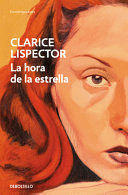
LA HORA DE LA ESTRELLA
LISPECTOR, CLARICE
Con La hora de la estrella Clarice Lispector puso el punto final a una gran carrera que constituyó uno de los momentos más altos de la literatura brasileña moderna.
«Lispector escribía como si nadie antes hubiese escrito. Fue uno de los genios del siglo XX, en la misma liga que Flannery O'Connor, Jorge Luis Borges y Fernando Pessoa. Extraordinariamente original y brillante, seductora e inquietante». --Colm Tóibín
Esta es "la historia de una inocencia herida, de una miseria anónima, una breve e intensa visión del absurdo que supone una existencia anodina...". En las páginas de La hora de la estrella, considerada una de sus obras más importantes, aparece en toda su magnitud el personalísimo estilo de Clarice Lispector: su peculiar forma de transformar las palabras en imágenes vigorosas y puras se une aquí a una compleja estructura formal.
ENGLISH DESCRIPTION
Clarice Lispector's best-selling masterpiece-"her finest book" (The Nation)-now in a special hardcover edition to celebrate the centenary of her birth, with an illuminating new afterword by her son.
The Hour of the Star, Clarice Lispector's consummate final novel, may well be her masterpiece. Narrated by the cosmopolitan Rodrigo S.M., this brief, strange, and haunting tale is the story of Macabéa, one of life's unfortunates. Living in the slums of Rio and eking out a poor living as a typist, Macabéa loves movies, Coca-Cola, and her rat of a boyfriend; she would like to be like Marilyn Monroe, but she is ugly, underfed, sickly, and unloved. Rodrigo recoils from her wretchedness, and yet he cannot avoid the realization that for all her outward misery, Macabéa is inwardly free. She doesn't seem to know how unhappy she should be. As Macabéa heads toward her absurd death, Lispector employs her pathetic heroine against her urbane, empty narrator-edge of despair to edge of despair-and, working them like a pair of scissors, she cuts away the reader's preconceived notions about poverty, identity, love, and the art of fiction. In her last book she takes readers close to the true mystery of life and leaves us deep in Lispector territory indeed.